Character Info
01416
繁
繁
手 64.8
⿰扌⿱龸子
豎
11
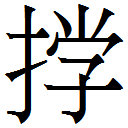 UK-02632 |
IRGN2269Unified&WithdrawnV5.0
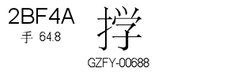
unified by U+2BF4A (GZFY-00688) for IVS, irg47.
unified by U+2BF4A (GZFY-00688) for IVS, irg47.

Similar To: 𫽊 (U+2BF4A)

Comments
IRGN2179 Henry Review - Part 2.txt
01416 UTC-02632 unified with U+632C for IVS, irg47. NOT unified with U+2BF4A (GZFY-00688). Raw Info
| 0 - Sequence Number | 01416 |
| 1 - Disscussion Record | unified by U+2BF4A (GZFY-00688) for IVS, irg47. |
| 2 - UTC Source | |
| 3 - UTC Image | UTC-02632.bmp |
| 4 - UK Source | UK-02632 |
| 5 - T Source | |
| 6 - T Image | |
| 7 - K Source | |
| 8 - K Image | |
| 9 - SAT Source | |
| 10 - SAT Image | |
| 11 - G Source | |
| 12 - G Image | |
| 13 - UTC Code | |
| 14 - Kangxi Radical | 64 |
| 15 - Stroke Count | 8 |
| 16 - First Stroke | 2 |
| 17 - T/S (0/1) Flag | 0 |
| 18 - IDS | ⿰扌⿱龸子 |
| 19 - Radical Stroke (RS) | 3 |
| 20 - RS+SC(stroke count) | =P363+T363 |
| 21 - Total Stroke | 11 |
| 22 - 修正总笔画数 | |
| 23 - Similar Ideographs | U+2BF4A 𫽊 |
| 24 - UTC Evidence (Figure No.) | |
| 25 - UTC Evidence (Title) | |
| 26 - UTC Evidence (Location) | |
| 27 - UTC kTotalStrokes | |
| 28 - UTC Ext. F2 Serial No. | |
| 29 - T References to evidence documents A | |
| 30 - T References to evidence documents B | |
| 31 - T File name of evidence image | |
| 32 - T kTotal Strokes | |
| 33 - K Ref. to Evidence doc | |
| 34 - K file name of evidence image | |
| 35 - K kTotalStrokes | |
| 36 - G Ref. to Evidence doc | |
| 37 - G Page No. in Evidence file(optional) | |
| 38 - G Row No. in Evidence file(optional) | |
| 39 - G Position in the Row (optional) | |
| 40 - G file name of evidence image | |
| 41 - G kTotalStrokes | |
| 42 - SAT Evidence | |
| 43 - SAT kTotalStrokes | |
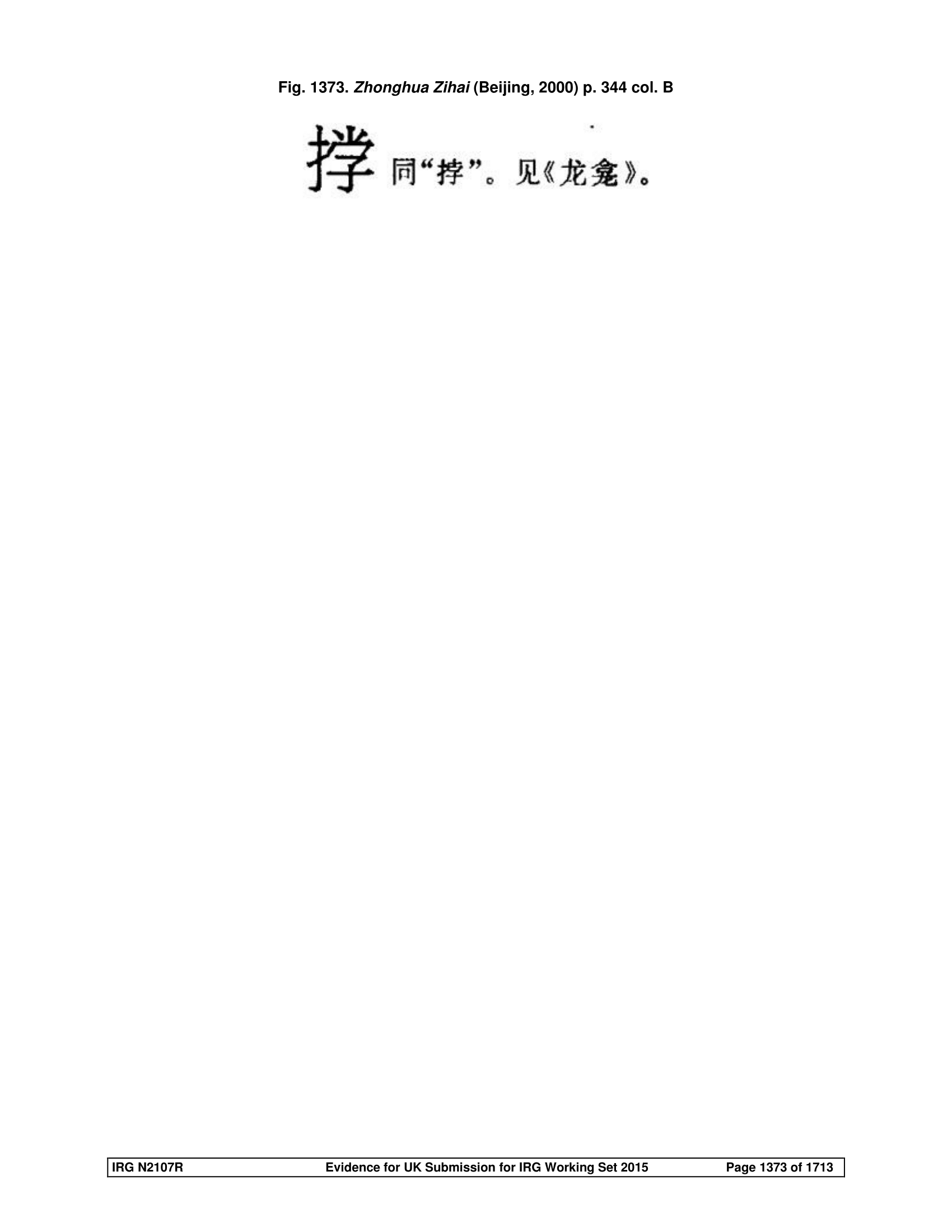
| 44 - UK Ref. to Evidence doc | {27} Zhonghua Zihai p. 344 |
| 45 - UK file name of evidence image | Fig. 1373 |
| 46 - UK Font code point | EB7E |
| 47 - UK Font glyph | |
| 48 - UK Other source references | |
| 49 - UK Mapping to traditional or simplified character | |
| 50 - UK Total stroke count | 11 |
| 51 - UK Note | This character is a variant of U+632C 挬, and is not cognate with U+2BF4A (simplified form of U+3A6D 㩭). The code chart glyph for U+2BF4A is incorrect, and does not match the source (Hànyǔ Fāngyán Dà Cídiǎn p. 5386), where the character is written ⿰扌学. |
Comments
UNIFICATION
This character comes from Longkan. In Longkan, the component 孛 is written as ⿱龸子.
For example, in Longkan, 浡 is written as ⿰氵⿱龸子:
and 勃 is also written as ⿰⿱龸子力:
This was discussed and concluded in IRG#47. The discussion record should be corrected as such.
COMMENT
For example, in Longkan, 浡 is written as ⿰氵⿱龸子:
and 勃 is also written as ⿰⿱龸子力:
In modern day, ⿱龸子 is considered to be a variant form of 學. Therefore, to avoid confusion and unnecessary encoding of variants, all characters using ⿱龸子 from Longkan (and other similar dictionaries from that era) could be considered for unification to 孛 (provided they are semantically equivalent).
EDITORIAL_ERROR
"unified with U+632C for IVS, irg47."
NOT
"unified with U+2BF4A (GZFY-00688)."