Character Info
Attributes:
Meeting Minutes
| Date | Description |
|---|
Attribute Changes
| Version | Description |
|---|---|
| 5.0 | For 04009, change IDS to ⿰孑阝 |
| 5.0 | For 04009, add Discussion Record "IDS=⿰孑阝, 2023-04." |
Glyph Changes
| Source Reference | Glyph |
|---|---|
| TC-766C | 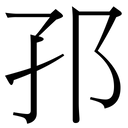 1.0 1.0 |
Raw Info
| group | TCA |
| a) Source reference | TC-766C |
| b) PUA Code of TTF | E2F8 |
| c) KangXi Radical Code | 163.0 |
| e) Stroke Count | 3 |
| f) First Stroke | 5 |
| g) Total stroke count | 6 |
| i) IDS | ⿰子阝 |
| j) Similar/ Variants | No |
| k) Ref. to Evidence doc | IRGN2486_TCA_WS2021_evi_03 |
| k1) Page No. | Page3, no.962 |
| l) Optional info | jié |
Review Comments
The left component is 孑, not a 孑-like component for 子.
The left component is 孑, not a 孑-like component for 子.
For U+2EB2A 𮬪, the current source reference is cited from 大正藏, I can’t understand the contextual meaning. Maybe SAT knows if the left component is 子. I also find out U+2EB2A is used as a place name character in 广东德庆, which is near to Xijiang River (西江), but it’s a pity that I don’t know the meaning as well.
According to the pronunciation provided by TCA, jié means the phonetic element should be 孑 not 子, so I still think ⿰孑阝 will be better. If TCA hopes to keep ⿰子阝, maybe we should use two IDSes for this case.
Prefer to use two IDSes (⿰子阝, ⿰孑阝) for this case.