Character Info
00035
 GZHSJ-0056 |
New evidences accepted, IRG 65.
Not unified to 兮 U+516E, not unified to 𠔃 U+20503, evidence accepted, IDS=⿱丷丁, IRG 63.
Not unified to 兮 U+516E, not unified to 𠔃 U+20503, evidence accepted, IDS=⿱丷丁, IRG 63.
Similar To: 干 (U+5E72)
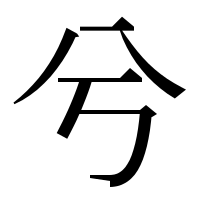


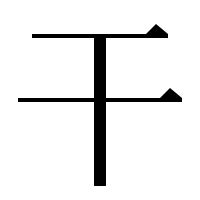

Attributes:
Meeting Minutes
| Date | Description |
|---|---|
| IRG #65 2025-10-15 (Wed) 9:48 am +0800 Recorded by CHEN Zhuang | new evidences accepted. |
| IRG #63 2024-10-22 (Tue) 10:08 am +0900 Recorded by CHEN Zhuang | Evidence accepted, IDS=⿱丷丁, Not unified to 兮 U+516E, Not unified to 𠔃 U+20503 |
Attribute Changes
| Version | Description |
|---|---|
| 2.0 | For 00035, add Discussion Record "Not unified to 兮 U+516E, not unified to 𠔃 U+20503, evidence accepted, IDS=⿱丷丁, IRG 63." |
| 2.0 | For 00035, change IDS to ⿱丷丁 |
| 4.0 | For 00035, add Discussion Record "New evidences accepted, IRG 65." |
Glyph Changes
| Source Reference | Glyph |
|---|---|
| GZHSJ-0056 | 1.0 |
Raw Info
| Character Reference | GZHSJ-0056 |
| Codepoint | E24C |
| Radical | 2.3 |
| Stroke Count | 3 |
| First Stroke | 4 |
| Total Stroke | 4 |
| IDS | ⿱䒑丨 |
| Variants | 干 |
| Pronunciation | N/A |
| Total No. of Evidences | 4 |
| Notes | N/A |
| Secondary Radical | N/A |
| Secondary Stroke Count | N/A |
| Secondary First Stroke | N/A |
Review Comments
▲ 《干禄字書》, 夷門廣牘本
▲ 《新集藏經音義隨函録》, 高麗藏, 大乘經音義第一之三, 大方等大集日藏經一部十卷, 第三卷
Unify to 兮 or 𠔃 based on Evidence 2 and the first piece of evidence in Comment #228?
The following pictures show this character is the variant of 兮.
▲ 《聚學軒叢書 第四集 隋唐石刻拾遺 上》, 揚州: 江蘇廣陵古籍刻印社, 1982.10, p. 29
▲ 黄永年: 《古代文献研究集林 第二集》, 西安: 陕西师范大学出版社, 1992.2, ISBN 7-5613-0401-3/K·32, p. 282
The first piece of evidence in Comment #228 show it is the variant of 𠔃.
The second piece of evidence in Comment #228 show the fanqie is 胡雞反.
In this case, China should keep ⿱䒑亅 in WS2024 rather than unify it to 兮. ⿱䒑亅 is quite normally used glyph which is usually exist in same texts with 兮.